 Menu
When we hear “driving under the influence,” we often think about having alcohol in our system and being behind the wheel of a car. However, driving under the influence covers many situations.
It is not just alcohol that puts you under the influence and makes you ineligible to drive. Drugged driving—be it illicit drugs, marijuana, prescription drugs, or some over-the-counter drugs—is just as dangerous. And it does not have to be a car that you are driving. It could be a motorcycle, ATV, boat, snowmobile or farm equipment.
The law recognizes the serious risks created by driving under the influence of alcohol or drugs. There are significant penalties:
Saskatchewan has the highest rate of impaired driving incidents of all the provinces – a rate almost triple that of the national average.
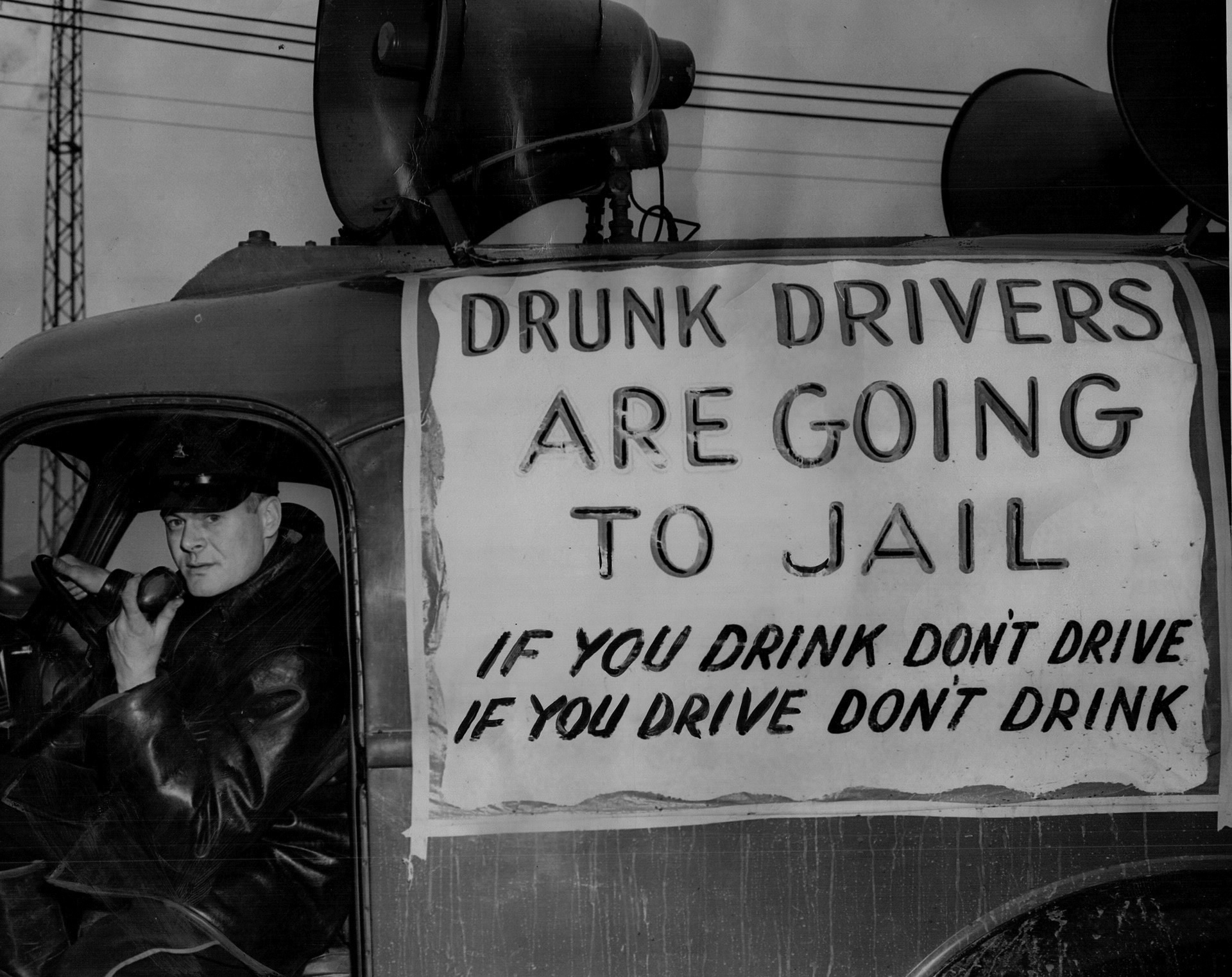
Fig. 1.
Sound truck warns against impaired driving, Toronto, 1948.
Public awareness campaigns about the dangers of being impaired predate the motor vehicle, originating with the Temperance movement of the late eighteenth century. However, it was not until the 1960s that large-scale public awareness campaigns about driving while impaired became prevalent.
For young and new drivers—including people 21 and under, people in the Graduated Driver’s Licensing program, and people with learner’s licences—the law is black and white. It is illegal to drive after drinking any amount of alcohol or taking any drugs. There is zero tolerance.