 Menu
Menu
Most everyone posts on social media. From Instagram to Snapchat to TikTok, it’s common to tell people where we are and how we’re doing.
It wasn’t always quite this way. Before social media, instant updates weren’t a thing. That’s not to say we didn’t post brief status updates. We just did it in a different way, by posting updates on cards and sending them through the mail. This was the era of the postcard.
Postcards are single pieces of thick paper, usually with a picture on the front and space for writing a message and address on the back.
The first recorded postcard dates back to 1840 England. Theodore Hook, a writer and notorious practical joker, got his hands on a card with a painting that made fun of postal workers. He stuck a stamp on it, wrote his address on the back, and mailed it to himself. Nobody knows for sure, but it’s believed he sent the card to troll postal workers.
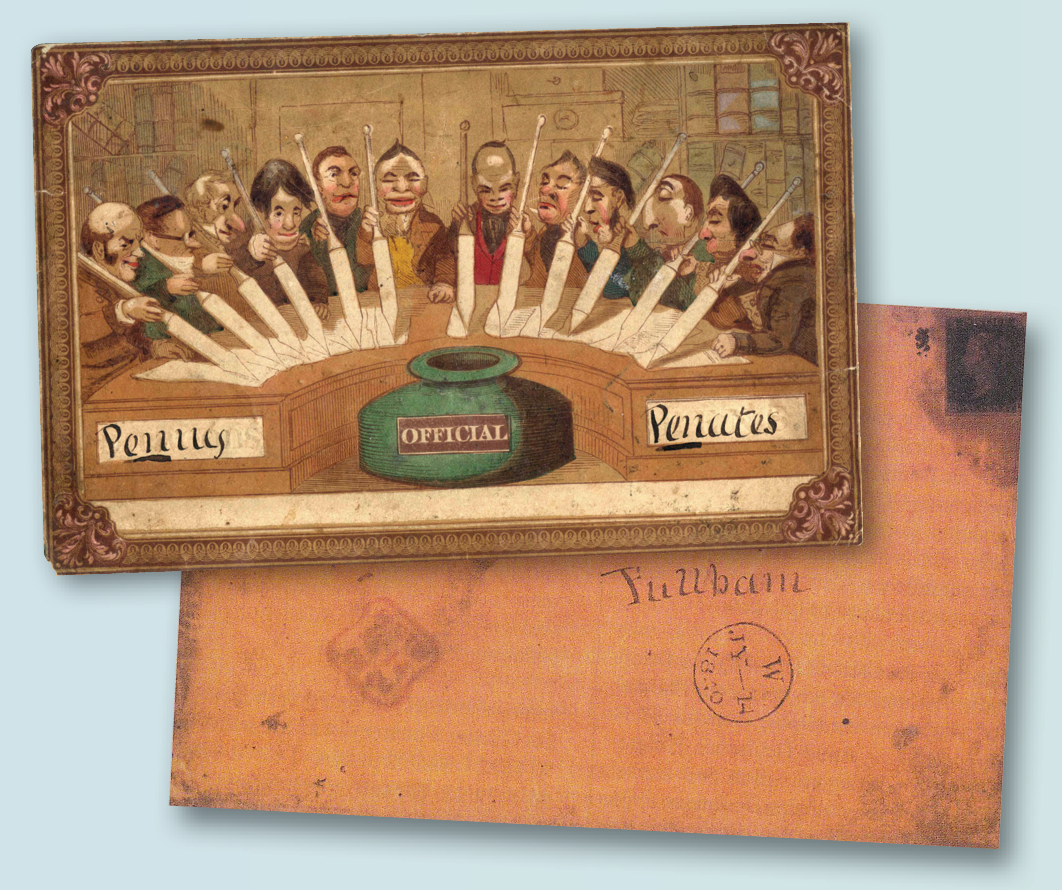
Theodore Hook’s Penny Penates postcard. Penny refers to Britain’s penny-black stamp, the world’s first self-adhesive stamp. Penates refers to Roman gods that protect pantries at home.
Hook is lucky the card showed up. This isn’t because Victorian-era postal workers couldn’t take a joke. Rather, in the 1800s most postal systems were highly regulated operations, run by the government. Sending cards in the mail without an envelope was against British mail regulations, and in fact contrary to the postal rules in every western country.
The postcard got its big regulatory break in 1860. That year, the American Congress passed a law that allowed people to mail small cards without an envelope. Americans didn’t much see the point, and the idea flamed out.
But the idea wasn’t dead. Rather, it smouldered for nine years, primarily in academic discussions. This all changed in January 1869. The idea caught fire, thanks to economist Emanuel Herrmann. Herrmann took the idea of postcards to the people, by publishing a proposal for them in a leading Austrian newspaper.
Herrmann asked that if you have a brief message to send, why go to the trouble of writing a letter on paper, placing it in an envelope, addressing and sealing the envelope, and then sticking a stamp on it? Wouldn’t it be more efficient if you could do all this with a single card?
Debate burned across the Austro-Hungarian empire, with a frequent topic being the issue of privacy
Postcards, Herrmann said, could be printed with the postage prepaid. There would be space for an address on the front and a message on the back. Reflecting the brief nature of the message, the card could be mailed to anyone in the Austro-Hungarian empire at a discounted rate.
Debate burned across the Austro-Hungarian empire, with a frequent topic being the issue of privacy. Would people want their correspondence seen publicly?
To settle the question, the Austro-Hungarian Empire post office launched a trial-run. They printed pre-stamped cards and sold them for half the going rate of mailing a letter. The result? Almost three million postcards were sent in the first three months alone.
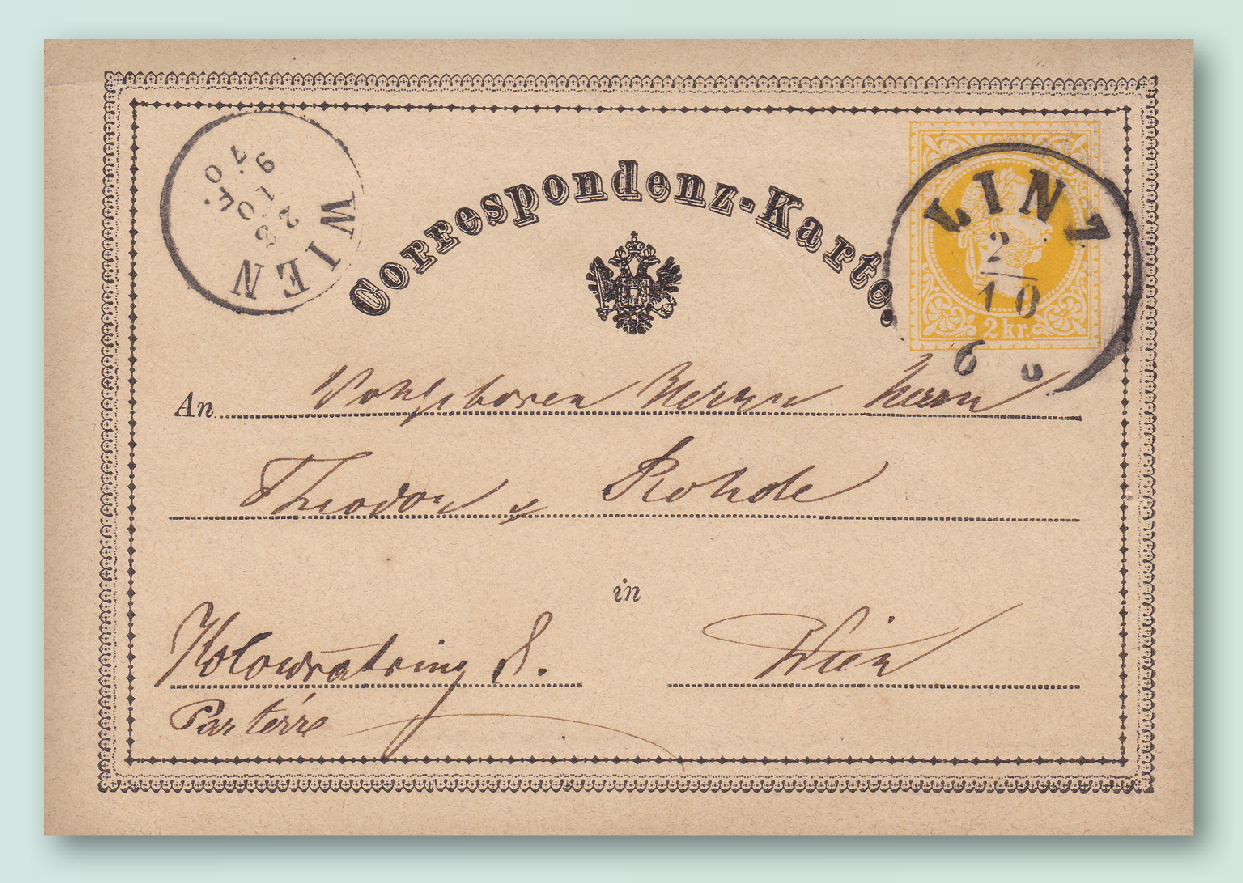
Austro-Hungarian postcard from 1870
One thing that made postcards so appealing was how quickly messages could be sent. At the time, large centres had mail pick-up and delivery several times a day. Messages zipped back and forth on postcards, making them the text message of the day.
The idea spread rapidly. From the United Kingdom (1870) to Canada (1871) to Japan (1873) and beyond, post offices almost everywhere started printing and selling postcards.
The United States post office introduced their own postcards in 1873. People could still buy privately-printed postcards, stamp them, and send them under America’s old 1860 law, though few people did. The new post-office-issued cards proved more popular because they could be purchased and mailed for 1¢, half the price of the postage alone on a private card.
At first, post cards generally could only be mailed within countries
At first, post cards generally could only be mailed within countries. This changed in 1874. Countries banded together to form the Universal Postal Union (UPU). The UPU is an international regulatory body, still in place today, that aligns global postal rules. At their first meeting, the UPU agreed to allow postcards to be sent across borders.
With the postcard exploding in popularity, post offices across Europe started loosening regulations. By the 1880s, most post offices followed the American model and accepted postcards printed by private companies. Where the Europeans differed from Americans is they allowed privately-printed postcards to be mailed at half the rate of regular mail, the same price as post-office issued cards.
Privately-printed postcards became an innovative business. While the address side remained blank, exclusively for the mailing address, private printers began adorning the message side with artwork, sometimes in colour. With postcards now featuring illustrations ranging from landmarks to portraits of public figures, the text message of the day was starting to look something like Instagram or Snapchat.
Postcards in the UK and North America languished under tighter regulations, leading to political movements advocating for postcard deregulation
Meanwhile, postcards in the UK and North America languished under tighter regulations, leading to political movements advocating for postcard deregulation. In response, in 1894 the UK and Canada liberalized the rules governing privately-printed postcards. America pivoted in 1898, changing their 1860 law so privately-printed postcards could be mailed at the same discounted price as postcards sold by the post office.
Perhaps the most consequential regulatory change came when the UK permitted “divided back” postcards in 1902. No longer were postcards required to have the message on one side of the card, the address and stamp on the other. Now, the message, address, and stamp could all be on the back of the card. The front of the postcard became a blank canvas for art, turning postcards into art-piece collectibles.
Divided-back postcards got the green light in Canada in 1903, France in 1904, and Germany in 1905. The United States joined in 1907, in compliance with a global regulatory change agreed to by the UPU.
With print and photography technology quickly advancing, several onerous regulations gone, and the postcard now being a blank canvas on one side, picture postcards became a craze. You might say they were “trending.” From advertisements to snapshots of current events to travel souvenirs, postcards were being sent around the world in the billions. The period from 1900 to 1913 became known as the Golden Age of Postcards.
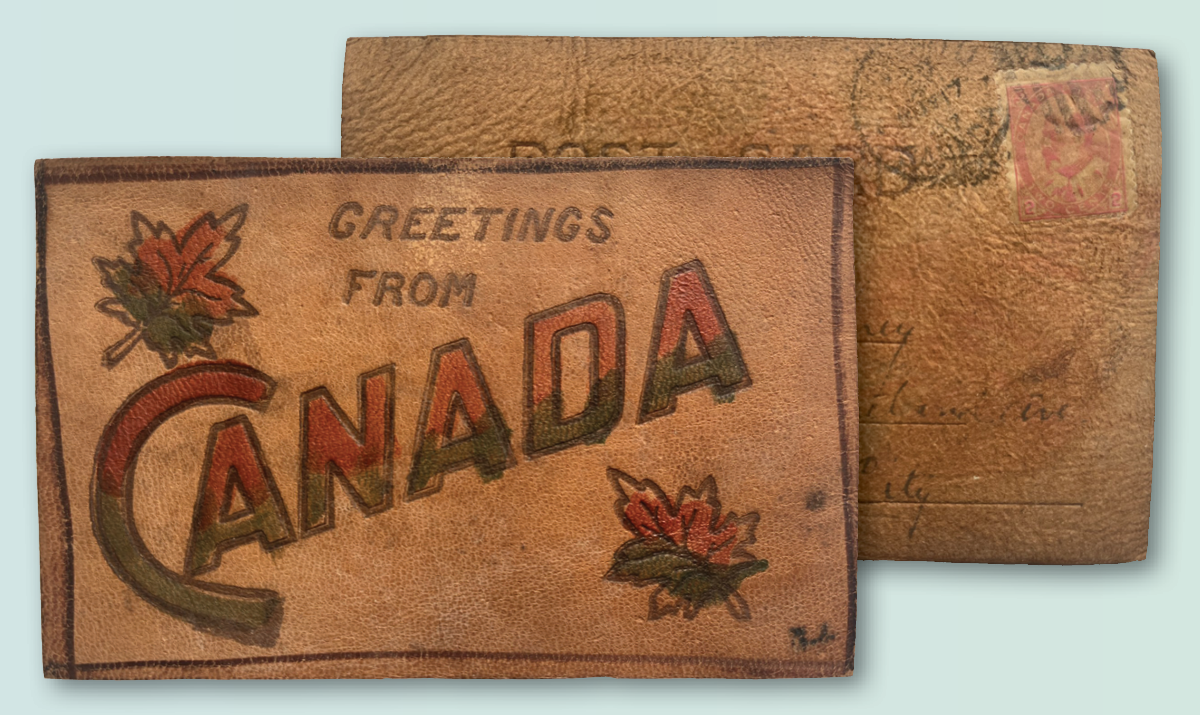
Leather Canada souvenir postcard, postmarked 1907
To keep goosing sales, printers got more creative. They introduced embroidered postcards, glitter-coated postcards, postcards made out of leather, and postcards imprinted on tin. Even 78 rpm records were embedded into postcards.
The new postcards were fun, and people loved collecting them. But the creativity was frustrating post offices. Novel postcards often were difficult to handle, tin ones could cut postal workers, and glittery ones left sparkles on everything and everyone they touched. After years of deregulation, some rules had to be tightened. By 1907, most post offices required the zaniest novelty cards to be mailed in an envelope.
World War I ended The Golden Age of Postcards. With people encouraged to consume less, postcards became less a collectable craze and more a utilitarian form of communication. Nevertheless, painted pin-up girls, war propaganda, and national symbols became popular postcards of the era.
Wartime censors loved the postcard, because their open nature made it quick and easy to review people’s correspondence.
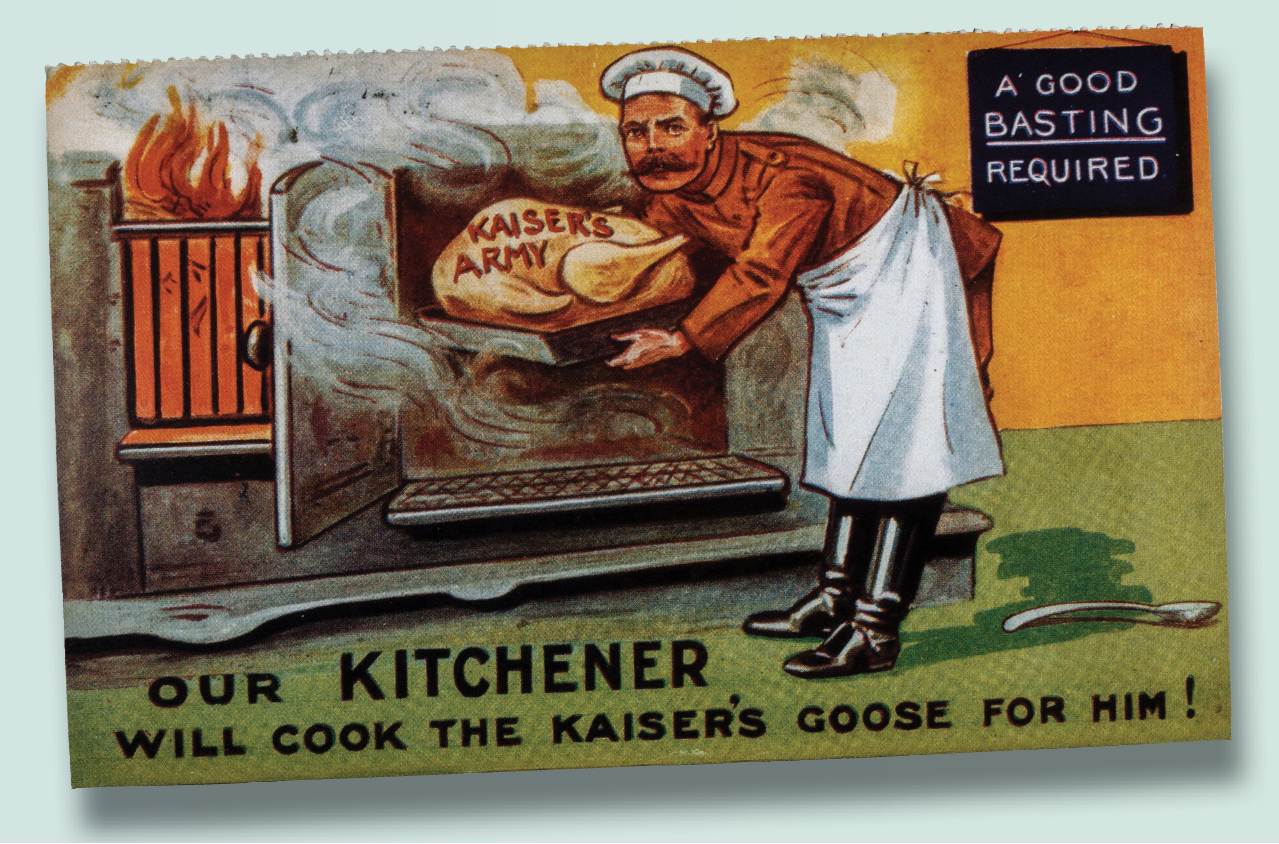
British wartime postcard featuring Field Marshal Horatio Herbert Kitchener. The British Secretary of State for War, he created the massive volunteer “Kitchener’s Army.” Kitchener died in 1916 when his ship struck a German mine.
When the war concluded, the postcard craze never picked up where it left off. Technology had moved forward, leaving the postcard behind. Telephones became the preferred method for speedy personal communication, and radio broadcasts and motion pictures drew people’s attention away from postcard collecting.
The Golden Age may have ended, but the postcard carried on. Throughout the twentieth century, postcards remained popular for advertising, appointment reminders, party invitations, personal messages, and especially to send a souvenir message to friends when on vacation.
Unfortunately for the postcard, it couldn’t dominate forever. Around the turn of this century, postcards fizzled out. Just as Emmanuel Herrmann saw the efficiency of the postcard in 1869, we realize today that email, instant messaging, and social media are more efficient than traditional mail.
Nevertheless, the postcard isn’t dead yet. You can still find postcards, mostly at tourist destinations, to mail to your friends and family back home.
In fact, search #postcard on social media, and you’ll find a surprising amount of postcard talk, along with artists who create custom and one-off postcards. For that matter, check out Postcrossing.com. These folks coordinate postcard events and can help you send and receive postcards from around the world.
Postcards will almost certainly never be the communication staple they once were. Yet, there is a tendency for retro things to come back. Who knows? Postcards could someday trend again.